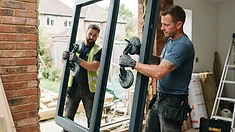
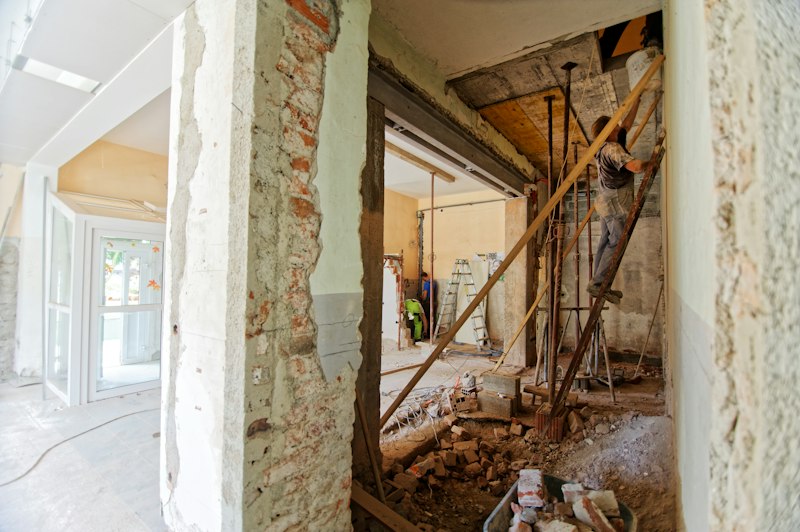
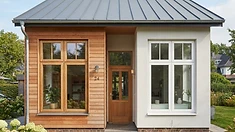
Learn how to measure, prepare, fix, seal and adjust a PVC window to prevent drafts, leaks and unnecessary heat loss in your home.
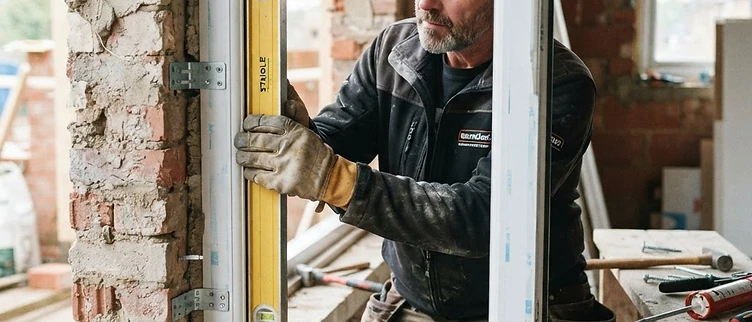
A PVC window performs well only when the opening is measured accurately and the frame is installed, sealed and adjusted as a complete system. The following method is suitable for renovation work in Spain and France, subject to the product instructions and local requirements.
1. Measure and prepare the opening
Measure the width and height at several points, checking both diagonals and the condition of the sill. Allow the installation clearance specified by the manufacturer; do not force a frame into an irregular opening. Remove loose mortar, dust, old sealant and damaged material. Repair cracks, damp areas or weak masonry before installation, and confirm that the sill has a suitable fall towards the exterior.
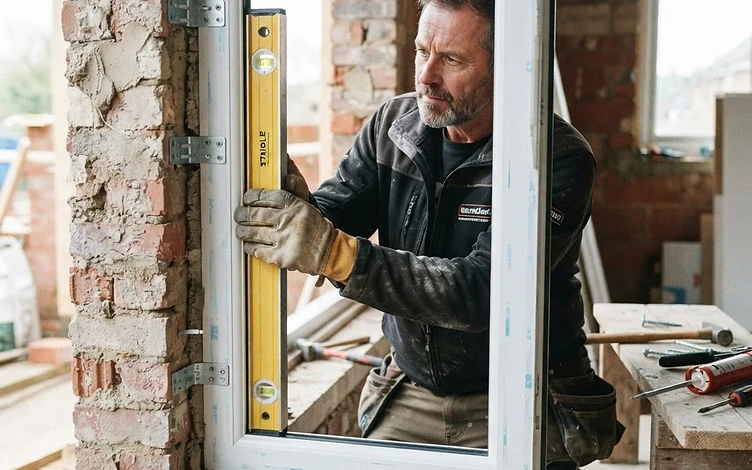
2. Fix, level and insulate the frame
Position the frame on load-bearing packers, keeping drainage paths clear. Check plumb, level, squareness and diagonals before drilling. Anchor through the reinforced fixing points with suitable screws or frame anchors, placing packers near fixing points so the frame cannot twist. Tighten progressively without deforming the profiles. Form the joint in layers: an exterior weather-resistant seal, a protected insulation zone using low-expansion window foam or mineral material, and an interior airtight seal. Where specified, use compatible waterproof or vapour-control tapes and connect them continuously at corners.
| Stage | Good practice |
|---|---|
| Measurement | Check several points, diagonals, sill condition and installation clearances. |
| Anchoring | Use approved fixing points, packers and compatible fasteners; avoid over-tightening. |
| Joint sealing | Protect insulation from moisture and create continuous interior and exterior seals. |
| Drainage | Keep frame drainage holes and the exterior sill route unobstructed. |
- Verify the opening dimensions and repair weak or damp masonry.
- Place packers, set the frame plumb and level, then check both diagonals.
- Fix the frame without twisting or crushing the PVC profiles.
- Install foam or other insulation continuously, following the product instructions.
- Apply compatible waterproof and airtight tapes or sealants where required.
- Rehang the sash, adjust hardware and test opening, closing and locking.
- Inspect seals, drainage paths, glass, finishes and the surrounding wall.
3. Hardware adjustment and common mistakes
After the insulation has cured as instructed, remove excess foam without cutting into the seals. Adjust hinges, keeps and compression so the sash closes smoothly and the gasket contacts evenly. Common causes of drafts, leaks and heat loss include inaccurate measurements, unsupported frames, missing packers, excessive anchor tension, unprotected foam, discontinuous tapes, blocked drainage holes and sealing over contaminated or wet surfaces. Do not use standard high-expansion foam around a window unless the system allows it.
Final checks and local requirements
Operate every sash and locking point, check uniform gasket compression, look for daylight or air movement, and inspect the exterior seal after rain or a controlled water test. Confirm that ventilation provisions, safety glazing, fire performance and other requirements match the project. Regulations and technical specifications can change, so verify current local requirements in Spain or France with the relevant professional or authority.
How much clearance should be left around a PVC window?+
Can window foam replace exterior waterproofing?+
Why does a new window still feel draughty?+
Planning a PVC window replacement or renovation? Art Deco 69 Concept can coordinate preparation, installation, sealing and finishing in Spain and France.
- Accurate installation improves comfort, acoustic performance and energy efficiency.
- A layered joint protects the frame-to-wall connection against air and rain.
- Final hardware adjustment helps maintain smooth operation and reliable sealing.
Need a project assessment?
Every demolition or excavation project has different access, terrain, structure and removal conditions. Send us your project details for a personalised assessment.