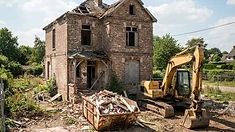
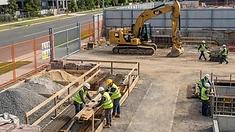
Find out how loading, transport, sorting and removal of soil and rubble are planned.
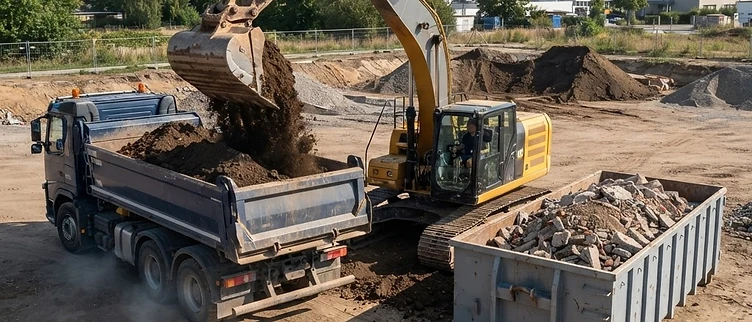
Material removal can represent a significant part of the cost of a demolition or excavation.
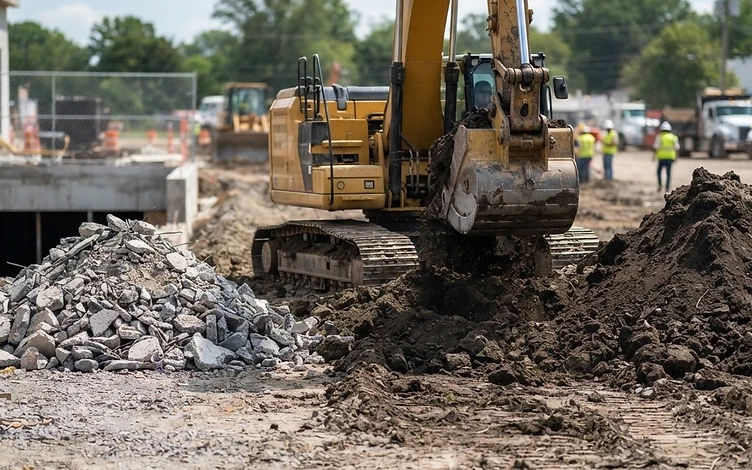
The difference between soil and rubble
Excavated soil can include:
- Topsoil
- Clay
- Sand
- Gravel
- Fills
- Soil mixed with debris
Rubble can include:
- Concrete
- Brick
- Mortar
- Ceramics
- Plaster
- Mixed materials
Why sorting matters
Separating the materials can facilitate:
- Recycling
- Reuse
- Transport
- Reducing mixed waste
- Clearer cost management

Estimating the volume
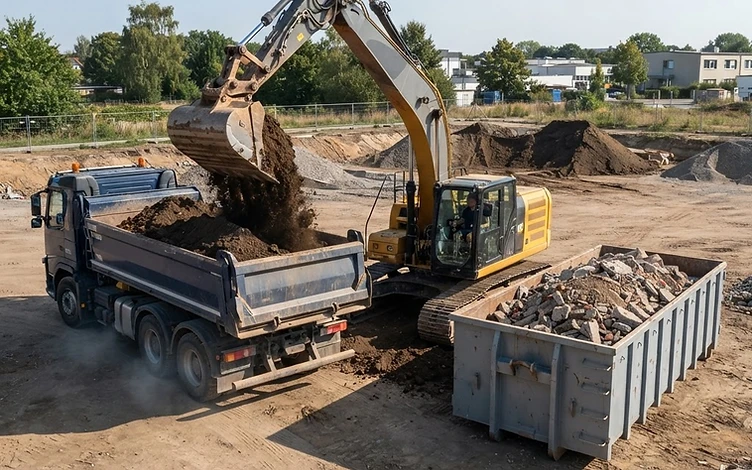
The volume of the resulting material can be larger than the apparent volume before excavation or demolition, because the material becomes loose and occupies more space.
Truck access
Before starting the work it must be checked:
- Whether the street allows access
- Whether there are weight restrictions
- Where the truck can stand
- Whether the machine can load directly
- Whether a container is needed
- Whether multiple trips are needed

Reusing the soil
Part of the soil can be reused for fills, terrain shaping, completion or landscaping. Reuse must only be done if the material is suitable for the intended purpose.
What the quote should include
- Type of materials
- Estimated volume
- Loading
- Number of trips
- Type of vehicle
- Disposal fees
- Cleaning the area
- Possible sorting operations
Frequently asked questions
Can the soil be taken anywhere?+
Can rubble be recycled?+
Can the number of trucks be estimated exact?+
Need a project assessment?
Every demolition or excavation project has different access, terrain, structure and removal conditions. Send us your project details for a personalised assessment.
Request sent successfully
The Art Deco Concept team will contact you shortly.